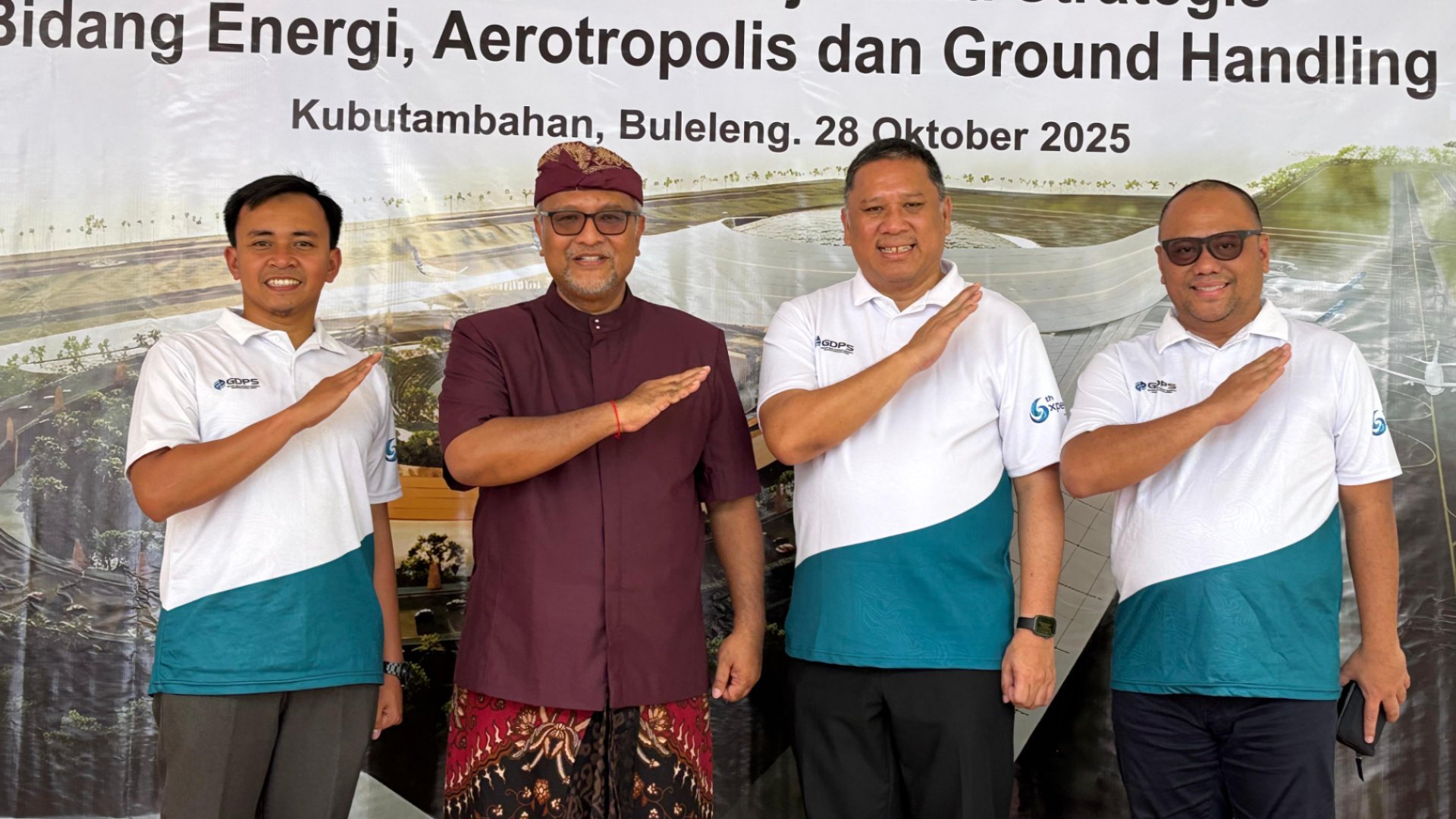
Kubutambahan, Buleleng — PT Garuda Daya Pratama Sejahtera (GDPS), part of the Garuda Indonesia Group with extensive experience in outsourcing management for the aviation industry, has been selected by PT BIBU Panji Sakti (BIBU) to support operations at Bali Utara International Airport. This trust was formalized through the signing of a Memorandum of Understanding (MoU) between the two parties on October 28, 2025 in Kubutambahan, Buleleng.
The signing marks a new chapter of collaboration between a globally-standard airport developer and an aviation workforce provider with proven professionalism. Erwanto Sad Adiatmoko, CEO of PT BIBU Panji Sakti, emphasized that the partnership with GDPS represents a critical step in ensuring the airport’s construction adheres to world standards while remaining rooted in Balinese values. “We are bringing partners with global reputations so that Bali Utara Airport is built to international standards, yet remains grounded in Balinese culture and harmony. This is a tangible step toward equitable development and enhanced national connectivity,” Erwanto stated.
Bali Utara International Airport is envisioned as a new hub for Indonesia’s air connectivity, while also serving as a solution to reduce congestion at the already heavily-trafficked Ngurah Rai Airport. The project is also expected to create opportunities for economic growth in North Bali through the integration of an aerocity zone, creative industries, clean energy, and eco-tourism.
Local Workforce Strength with Global Standards
PT Garuda Daya Pratama Sejahtera (GDPS) is widely recognized as a trusted partner to the Garuda Indonesia Group in managing human resources for the highly-regulated aviation industry. With its experience in aviation workforce deployment, airport support services, and operational technology, GDPS brings a professional approach aligned with BIBU’s vision of building a world-class airport.
Through this collaboration, GDPS will play a key role in developing local workforce capacity in aviation operations, ground services, security, and airport technology. This local empowerment strategy is expected to create multiplier effects—not only absorbing labor but also elevating the professional standards of North Bali’s workforce to compete globally.
AA Alit Kakarsana, a Balinese community leader from Puri Blahbatuh, Gianyar, who participated in the signing ceremony, expressed community support for the project. “We welcome BIBU’s decision to partner with PT GDPS, a local organization with global experience. This demonstrates the commitment that Northern Bali Airport’s development is not just about infrastructure—it’s about empowering Balinese people,” AA Alit Kakarsana said.
Public Policy Perspective
Public policy observer H. Prasetyo Sudrajat viewed the BIBU-GDPS collaboration as a strategic leap in building a stronger and more competitive national aviation ecosystem. “PT BIBU is no longer merely an airport developer; it has become a global corporation capable of preparing human resources for a highly regulated aviation industry. GDPS’s presence will add significant value in ensuring that everyone involved in building and managing Bali Utara Airport possesses world-class competency,” he noted.
Prasetyo added that this collaboration could serve as a model for inclusive public-private partnerships—where infrastructure investment not only produces physical structures but also develops human capital and strengthens surrounding communities.
With the backing of various stakeholders, Bali Utara International Airport is expected to become a new gateway for Indonesia’s tourism and investment sectors. “The Northern Bali airport will ultimately stand as an icon of Balinese pride, and a symbol that national infrastructure development can progress hand-in-hand with cultural preservation and local community empowerment,” Prasetyo concluded.